
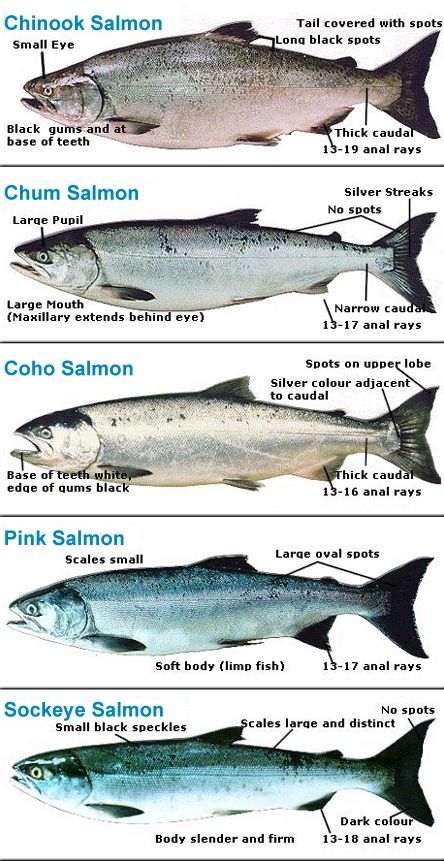
When we first started promoting our fish at farmers markets, salmon was all the rage. It was on every restaurant menu and in every supermarket across and country. The challenge then was that the only widely available salmon was farmed raised. Farmed salmon is a genetically engineered Atlantic salmon grown in net cages in the open ocean off the Pacific coast of Chile (mostly). You may have seen wild salmon canned or “fresh” in the fish counter on occasion. Back in the early 2000’s, we spent many hours discussing the superiority of Wild Salmon over farm-raised with consumers. Well, times have changed rather quickly and now it seems that a large share of seafood consumers are well aware of the wild vs. farmed debate and consistently seek out sustainably harvested wild Alaska salmon. As you probably know, wild salmon has higher omega-3 oils and better nutrition, it’s more eco-friendly and has a superior flavor and texture. What you may not know is that there are 5 species of Wild Pacific Salmon caught in the cold waters of the Pacific Ocean around Alaska. We’re commonly asked, “which one is the best?” There is no simple answer, but we can certainly help you determine your favorite salmon. Here is a basic overview:
1. Sockeye or Red Salmon is the darkest red of the five wild Alaska salmon species and has a rich, pronounced salmon flavor. Due to its high omega-3 oil content and astaxanthin levels, sockeye is often considered one of the most nutrient-dense salmon species. These fish migrate thousands of miles across the Pacific Ocean during their 2–3 year lifespan. Sockeye is our favorite salmon for sashimi, though we also grill and pan sear it often. Worldwide, sockeye has long been especially popular in Japan and other global seafood markets.
2. Coho or Silver Salmon is slightly lighter in color and milder in flavor than sockeye, while still offering excellent omega-3 nutrition. Coho tends to stay juicy and flavorful when cooked. It is our favorite salmon for baking, grilling, and smoking. In our experience, coho has historically been one of the most popular wild salmon species among American consumers.
3. Keta Salmon (known in Alaska as chum salmon) is mild, lean, and still provides significantly more omega-3 oil than most whitefish species. Due to its mild taste and firm texture, we think keta makes an excellent substitute for cod or halibut while offering the nutritional benefits of salmon. The flesh turns a pale pink when cooked and does especially well with sauces or gently poached in white wine and water. Keta is one of our favorite salmon species to prepare for guests who may not think they enjoy salmon. Kids often love it too. Worldwide, keta is especially valued for both its roe and its versatility.
4. Pink Salmon has traditionally been canned, as it is the most abundant of the five wild Pacific salmon species. We recommend canned wild salmon over farmed salmon any day of the week. Pinks have a two-year lifecycle and are generally more abundant in odd-numbered years. Pink salmon provides excellent protein and omega-3 nutrition and works especially well in chowders, salads, omelets, and salmon cakes. Historically, most of our pink salmon harvest was wholesaled directly to the cannery at the time of harvest.
5. King or Chinook Salmon is the largest and least abundant of the five wild Pacific salmon species. It spends several years feeding in the open ocean and can reach extraordinary size. King salmon is Alaska’s state fish and is prized for its rich flavor and exceptionally high omega-3 oil content. It is excellent cut into steaks and prepared simply. We did not harvest any king salmon during our last fishing season, so we often suggest coho as a more accessible alternative.
For many years, sockeye was our family’s favorite salmon. Over time, we’ve come to appreciate all five species for different reasons, cooking methods, and seasons. We encourage people to try a variety of wild Alaska salmon over time and discover which species best fits their own table.
ENJOY!



No comment yet, add your voice below!